What is reflexology?
Reflexology is based on the Chinese principle that certain areas on the soles of your feet or hands –
containing millions of nerve endings – correspond to other parts of the body. All systems and organs of
the whole body are said to be mirrored or reflected in smaller peripheral areas.
‘Reflexology stimulates the body into healing itself by improving circulation, reducing stress, pain and
restoring natural balance.
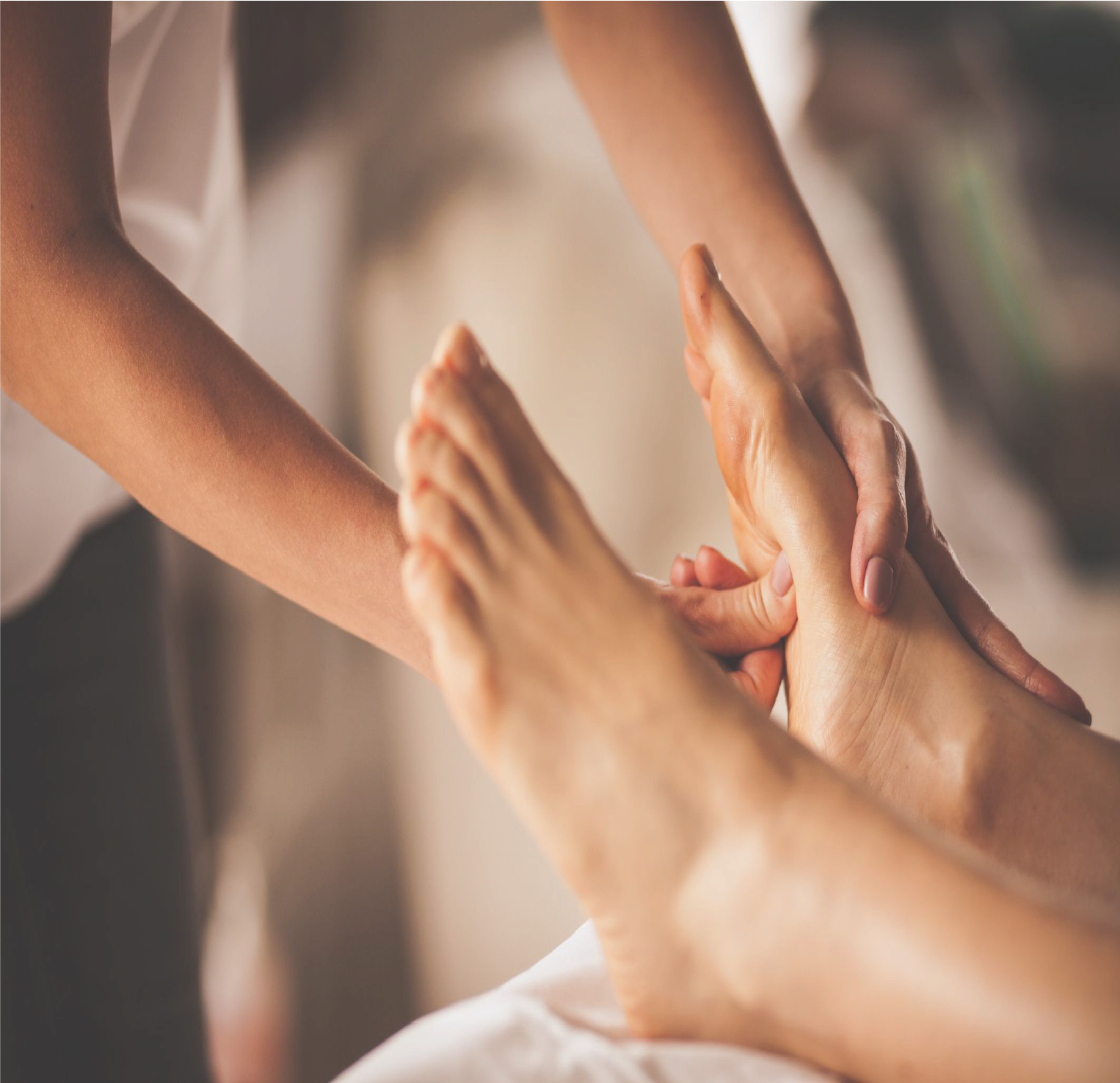
Practitioners massage feet and apply pressure to certain points to stimulate organs,
nerve endings and energy pathways to promote health,’
This approach can be applied alongside conventional Western medicine to improve wellbeing and
vitality.
In reflexology and acupuncture, the body is divided into 12 pairs of energy zones, known as Meridians,
Practitioners believe that when these energy channels become blocked a person feels unwell,’ he says.
‘They aim to dissolve any blockages causing ill-health by encouraging the free flow of vital energy
through the body.’
Reflexology
Reflexology is a non-intrusive complementary health therapy, based on the theory that different
points on the feet, lower leg, hands, face or ears correspond with different areas of the body.
Reflexologists work holistically with their clients and aim to work alongside allopathic healthcare to
promote better health for their clients.